
Cornus officinalis
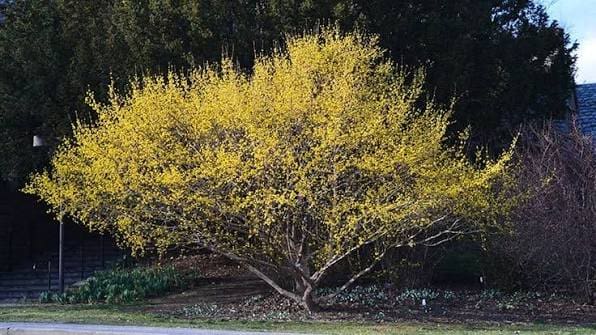
Cornus officinalis, commonly known as Japanese cornelian cherry, is a long-lived deciduous small tree valued for its early-season flowers, attractive bark, and colorful fruit. Native to China, Korea, and Japan, it develops a broad, rounded form with multiple trunks or low branches and can become an impressive specimen with age.
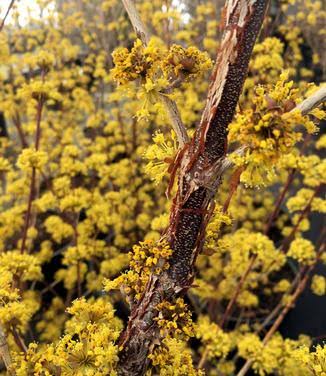
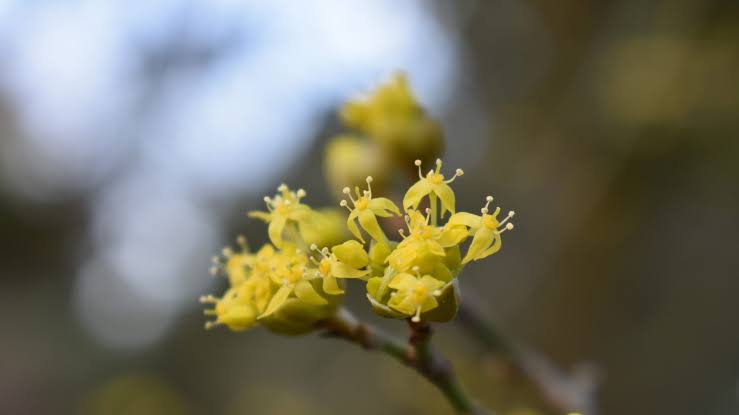
One of its most notable features is its very early bloom period. Clusters of small, bright yellow flowers appear along the bare branches in late winter or very early spring, often before the leaves emerge. The flowers provide an important early source of nectar and pollen for emerging pollinators. As the season progresses, the foliage emerges fresh green and remains attractive through summer.
By late summer, the flowers develop into bright red, oval fruits that are especially ornamental when they ripen in abundance. The fruits are attractive to birds and other wildlife and can also be used for preserves and other culinary purposes. In autumn, the foliage often develops shades of yellow, orange, or reddish-purple before dropping.
The bark becomes increasingly interesting as the tree matures, developing gray-brown to exfoliating, mottled bark that provides winter interest. With its combination of early flowers, summer foliage, colorful fruit, fall color, and attractive mature bark, Cornus officinalis offers several seasons of ornamental value.
Japanese cornelian cherry performs best in full sun to partial shade and prefers moist, well-drained soil, although established plants are reasonably adaptable. It is generally less prone to the serious disease problems associated with some flowering dogwoods and makes an excellent specimen or small ornamental tree for residential landscapes, woodland edges, and mixed borders.
Mature Size: 15–25 ft. tall × 15–25 ft. wide
Growth Rate: Moderate
USDA Zones: 5–8
Light: Full sun to partial shade
Soil: Moist, well-drained; adaptable
Flower: Bright yellow, late winter to early spring
Fruit: Bright red, late summer
Fall Color: Yellow, orange, and red-purple tones
Habit: Multi-stemmed or low-branched, rounded
Uses: Specimen tree, woodland garden, mixed border, wildlife garden, and small landscape tree