
Sambucus canadensis
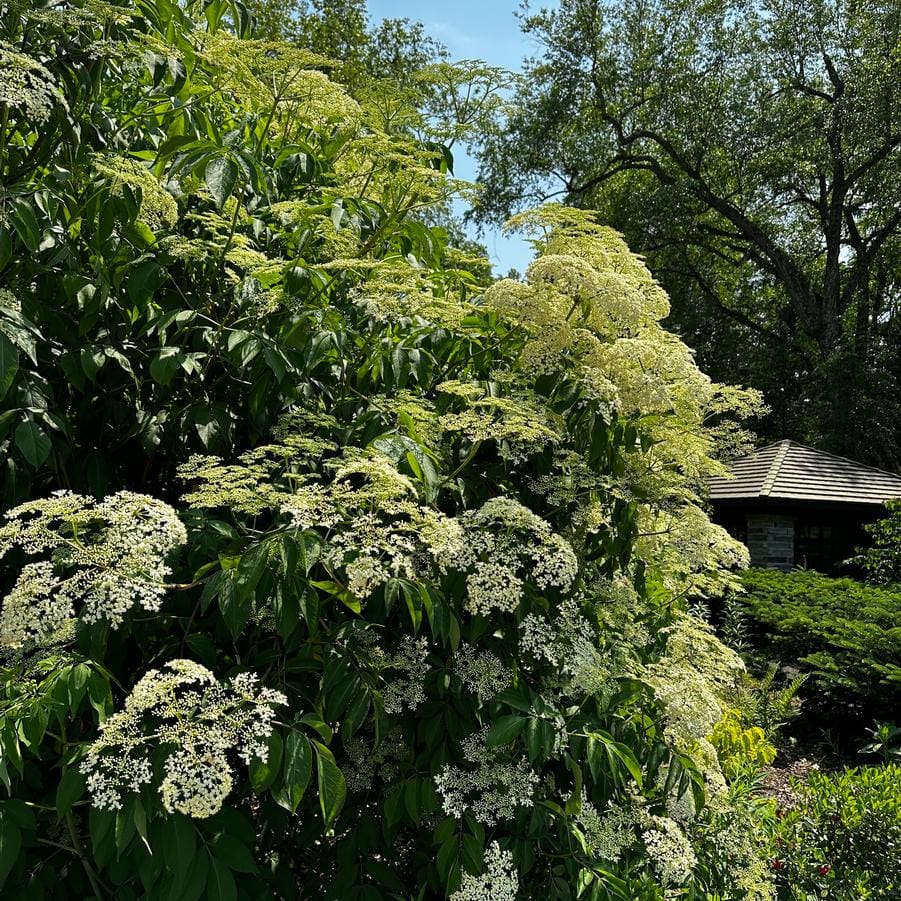
Sambucus canadensis, commonly known as American elderberry, is a large, deciduous native shrub valued for its fragrant summer flowers, abundant fruit, and importance to wildlife. Native across much of eastern and central North America, it naturally occurs along streams, wetlands, moist woodlands, and other areas where soils remain reasonably fertile and moist. It develops a broad, multi-stemmed form with arching branches and can form substantial colonies through root suckering.
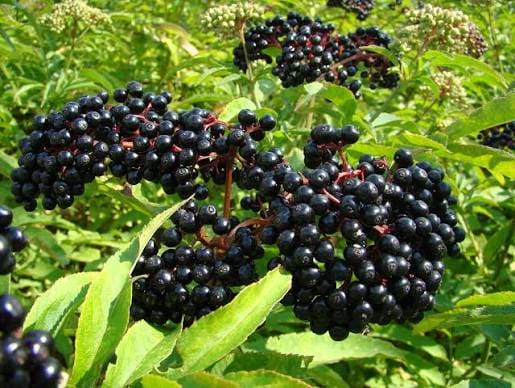
Large, pinnately compound leaves emerge fresh green in spring, followed by broad clusters of small, creamy-white flowers in early summer. The fragrant flowers are attractive to bees and other pollinators. By late summer, the flowers give way to drooping clusters of small, purple-black elderberries that are highly attractive to birds and other wildlife. The berries are edible when properly cooked and are traditionally used in jellies, pies, and wine.
American elderberry is adaptable to full sun to partial shade and performs best in rich, moist, well-drained soil. It also tolerates periodically wet conditions and can adapt to a surprisingly wide range of soil types, including clay and alkaline soils. Full sun generally produces the best flowering and fruiting.
This is a vigorous, somewhat informal shrub rather than a highly manicured landscape plant. Plants spread by suckers and can form thickets if left unchecked, making them particularly useful for naturalized areas, wildlife plantings, erosion control, rain gardens, streamside plantings, and the back of informal shrub borders. Pruning can be used to remove older stems and maintain a more manageable form.
American elderberry is an especially valuable native plant for wildlife. Its flowers support pollinators, while the fruits are eaten by numerous species of birds and mammals. The dense branching also provides cover and nesting habitat, making this a useful addition to gardens designed to support a broad range of wildlife.
Mature Size: 5–12′ tall × 6–12′ wide
Growth Rate: Medium
USDA Zones: 4–8
Light: Full sun to partial shade
Soil: Moist, fertile, well-drained; adaptable to wet and dry conditions
Water: Average to high; tolerates periodically wet soil
Flower: Fragrant, creamy-white clusters in early summer
Fruit: Purple-black berries in late summer
Foliage: Green, pinnately compound; yellow-green tones in fall
Habit: Multi-stemmed, spreading, suckering
Wildlife: Excellent for birds, pollinators, and other wildlife
Uses: Native gardens, wildlife gardens, rain gardens, naturalized plantings, streamside areas, erosion control, and informal shrub borders